Encyclopedia · Where it's practiced
Emotional literacy for kids and teens
Words before patterns become cycles.
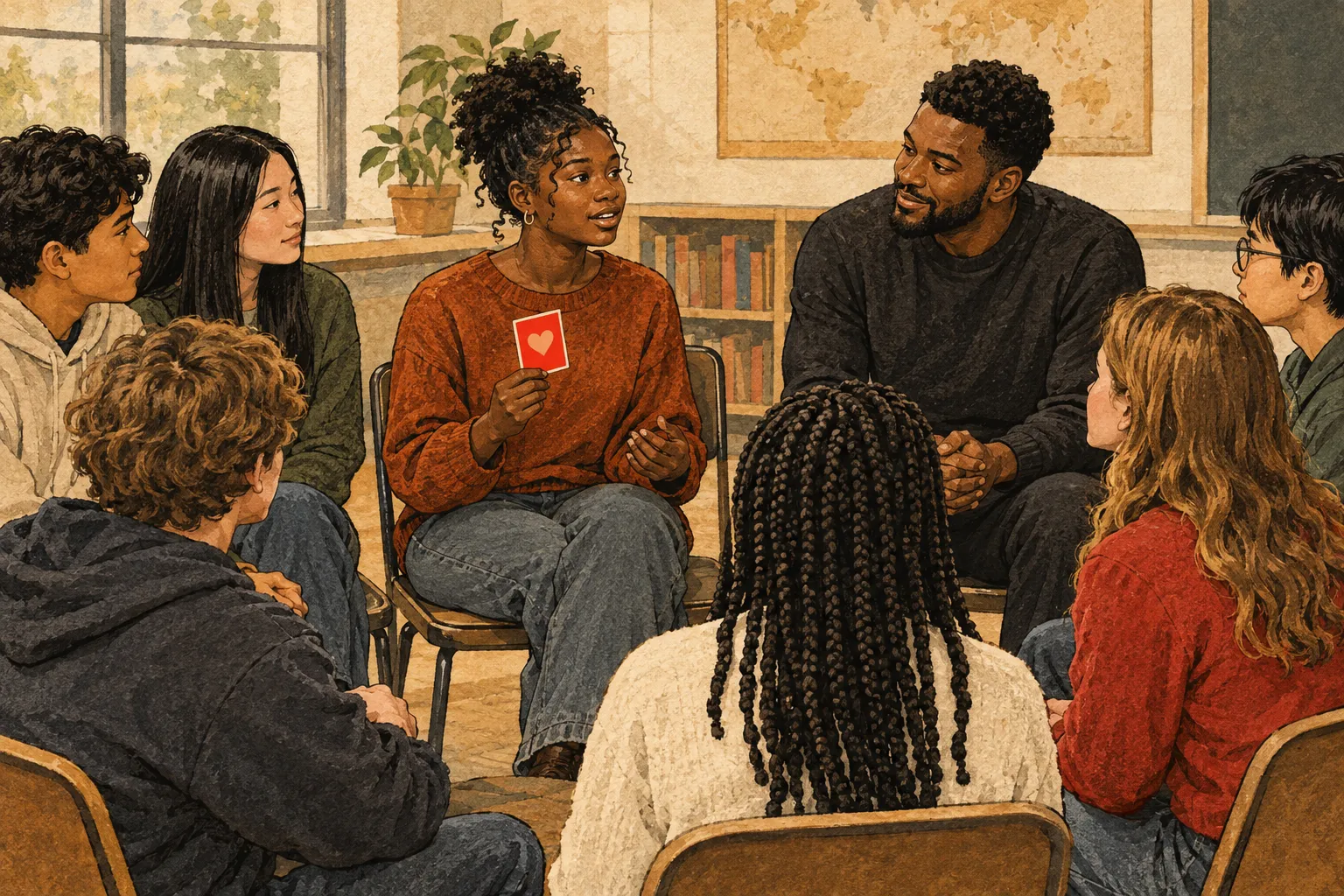
Teaching emotional literacy to children and teens gives young people words for what they feel and tools to handle it — before destructive Coping mechanisms become habits.
Why early matters
The Theory of Emotional Illiteracy-Based Criminality (TEIBC) holds that coping patterns are adopted in response to unprocessed pain, much of it in childhood. Adverse childhood experiences are common and strongly linked to later struggles,1 but emotional skills are teachable: school SEL programs improve both behavior and academic achievement.2
By age
- Ages 3–7: name the big families — mad, sad, scared, happy. Point to where it lives in the body.
- Ages 8–12: expand vocabulary (frustrated, jealous, embarrassed). Introduce The pause and Long-exhale breathing.
- Teens: connect feelings to behavior and choices. Talk about coping honestly — including substances, social media and anger. Teens respond to respect and to facilitators who have lived it.
For adults who care for young people
The single strongest lesson is modeling. Children learn more from hearing an adult say "I'm frustrated, so I'm going to take a minute" than from any worksheet. See Emotional literacy for families.
-
Felitti, V. J., et al. (1998). American Journal of Preventive Medicine, 14(4), 245–258. doi:10.1016/S0749-3797(98)00017-8 ↑
-
Durlak, J. A., et al. (2011). Child Development, 82(1), 405–432. ojp.gov ↑
Put this into practice
Schools & workplaces
Bring 10P to your school or team
Workshops on communication, culture, conflict and how people lead together.
Book a workshop
See also
Cite this entry: Samual Nathaniel Brown. “Emotional literacy for kids and teens.” The Emotional Literacy Encyclopedia, 10P Program, 2026-10-25. https://emotionalliteracy.org/encyclopedia/emotional-literacy-for-kids-and-teens/