Journal
You can learn to read your own heart: welcome to the Emotional Literacy Encyclopedia
Think about everything school taught you to read. Words. Numbers. Maps. Clocks. Maybe music.
Now think about the one thing you carry everywhere, every day, that decides how you talk to your children, how you handle a boss, whether you pick up the phone or pick up a drink: your feelings. Who taught you to read those?
For most of us, the honest answer is nobody. We learned by watching. We learned that some feelings get you hurt and some get you respected. A lot of us learned that the safest feeling to show is anger, because anger keeps people back. So we called everything mad — the grief, the fear, the shame, the loneliness — and we went through life using one word for twenty different things.
That is not a character flaw. It is a reading problem. And reading problems can be taught.
Why this site exists
I spent 24 years inside California prisons. The thing that changed my life was not a program that told me to behave. It was learning to read what was happening inside me, then learning to choose what to do about it. I tell that story in "No one is born bad", and the theory that came out of it lives in the encyclopedia as the Theory of Emotional Illiteracy-Based Criminality (TEIBC).
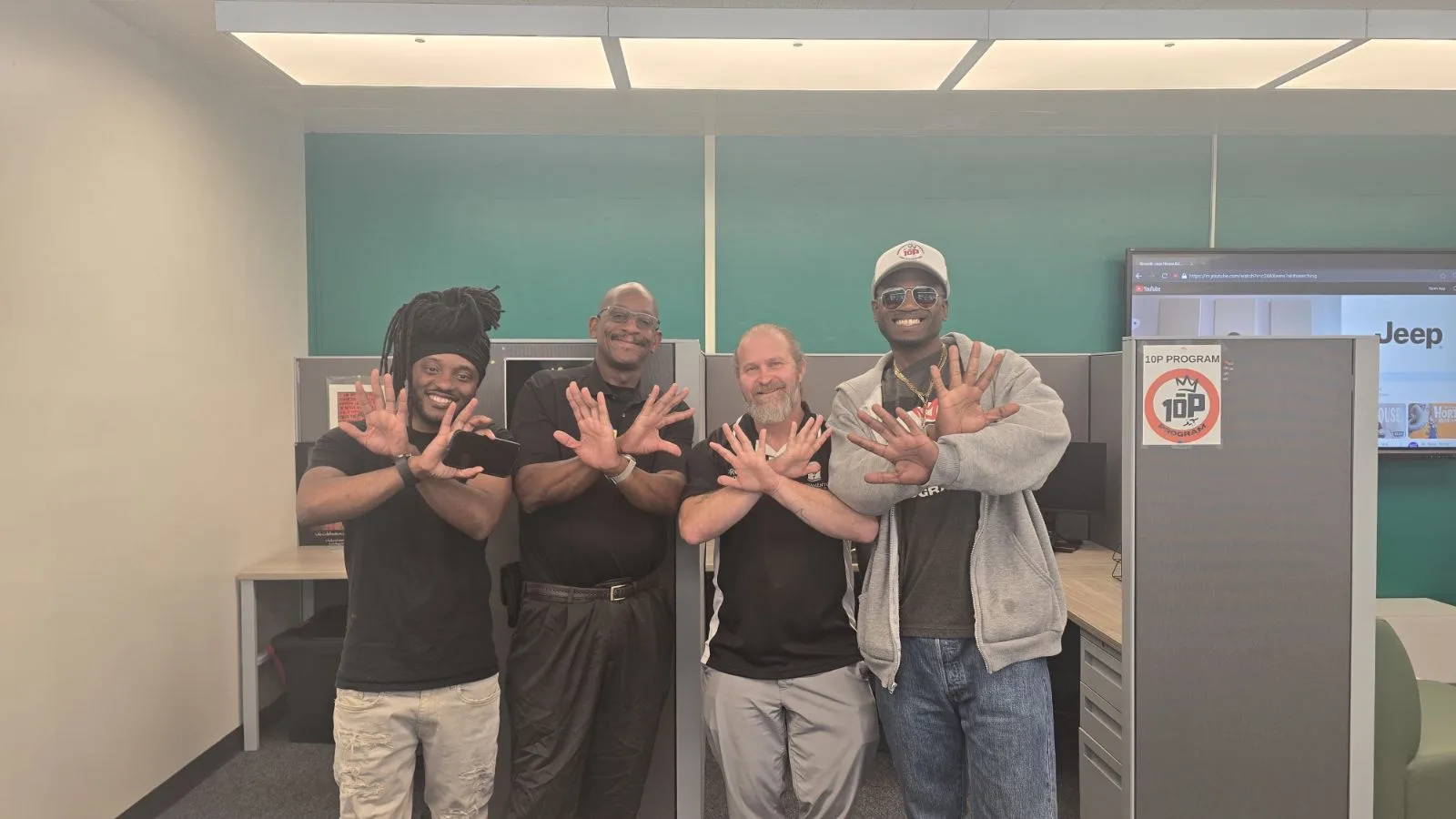
Since then, through the 10P Program, I have taught emotional literacy to men and women inside, to families, to young people, to athletes and to organizations. Wherever I go, I hear the same thing: Why did nobody teach me this?
There is plenty of advice about feelings online. What has been missing is one trustworthy place where the language is defined, the tools are explained step by step, and the whole thing hangs together as a system. That is what this site is for. Think of it as an encyclopedia for the inside of a person.
Literacy first, then intelligence
People ask why we say emotional literacy when everyone else says emotional intelligence. Here is the short version.
To be emotionally literate is to be able to read yourself. You notice the signal, you name it precisely, and you understand where it is coming from. That is self-awareness.
To be emotionally intelligent is to choose the right tool for what you read. You manage the feeling, you respond with intention, and you repair when you get it wrong.
Emotional intelligence is part of the larger emotional literacy system, and it depends on the reading. You cannot manage what you cannot read. If you think you are angry when you are actually grieving, every anger tool you pick up will fail you. The full explanation is in Emotional literacy vs. emotional intelligence.
In the 10P system we teach it as four moves: Read. Understand. Respond. Repeat.
No one is born bad
The idea at the center of this site is simple and it is not soft: no one is born bad, and no one is born evil. People adopt destructive behavior, including criminality, as a coping mechanism for trauma they never processed.
That is a human truth, not a prison truth. The man who robs a store and the woman who empties her bank account at midnight may be doing the same emotional thing: trying to make a feeling stop. So is the fourth drink, the endless scroll, the explosion at the dinner table, the eighty-hour work week that keeps someone from going home. Different behaviors, one root. The difference is who pays the cost.
If a coping mechanism was learned, it can be replaced. That is the hope in this whole project.
What you will find here
- The encyclopedia. Clear, plain-language entries on every part of emotional literacy, from Self-awareness and Emotional regulation to trauma, families, work and reentry.
- Emotions A–Z. Thirty-plus feelings, each with how it shows up in the body, what it is telling you, and one thing to try. Start with grief or shame. They are the two most often disguised as anger.
- Tools. Step-by-step practices you can use today, like Name it to tame it, The pause and the Feelings journal.
- The Emotional Literacy Test. Twenty questions, about five minutes. It shows how well you read emotion and how well you respond to it. Nothing you answer is saved.
- The app. A free daily check-in, a word of the day and a private journal that stays on your phone.
- Watch. Short episodes of Emotional Literacy and Me, starting with Episode 1, "No one is born bad."
- This journal. New posts every week. Stories, questions from readers, and what we are learning in the circles.
Start this week: seven days, ten minutes a day
You do not need to read the whole site. Try this instead.
- Day 1. Take the test. Notice which half scored lower, reading or responding. That is where you start.
- Day 2. Learn three new feeling words. Pick three from Emotions A–Z that you rarely use. Say them out loud.
- Day 3. Check in three times. Morning, midday and night, ask: What am I feeling, and where is it in my body? The app will remind you.
- Day 4. Look under the anger. The next time you get irritated, ask what is underneath it. Fear? Hurt? Embarrassment?
- Day 5. Name one coping mechanism. Choose one habit you reach for when a feeling gets too big. Do not judge it. Ask what job it is doing for you.
- Day 6. Try one tool. Use The pause or Long-exhale breathing in a real moment, not just a calm one.
- Day 7. Write it down. Spend ten minutes in the Feelings journal: what you read this week, what you understood, how you responded, and what you will repeat.
Then do it again. That last step is the whole system: repeat until the new response becomes who you are.
Go further with 10P
If this lands for you, there is more. The 10P Program brings emotional literacy to prisons, schools, families, teams and organizations. Our workbooks and the B.E.L.T. curriculum materials are in the 10P shop. And if you want to wear the message, New Nubian Fashions puts it on hoodies and tees made for kings, queens and the young ones watching them.
Most of all, come back. Bring someone with you. Every person who learns to read their own heart makes the people around them a little safer.
Read it. Understand it. Respond to it. Repeat.
— Samual Nathaniel Brown
Put this into practice
 Free · 5 minutes
Take the Emotional Literacy Test
Twenty questions. Scores for reading emotion and responding to it, across all four quadrants of the 10P system.
Start the test
See also
Cite this entry: Samual Nathaniel Brown. “You can learn to read your own heart: welcome to the Emotional Literacy Encyclopedia.” The Emotional Literacy Encyclopedia, 10P Program, 2026-10-25. https://emotionalliteracy.org/journal/welcome-to-emotional-literacy/